
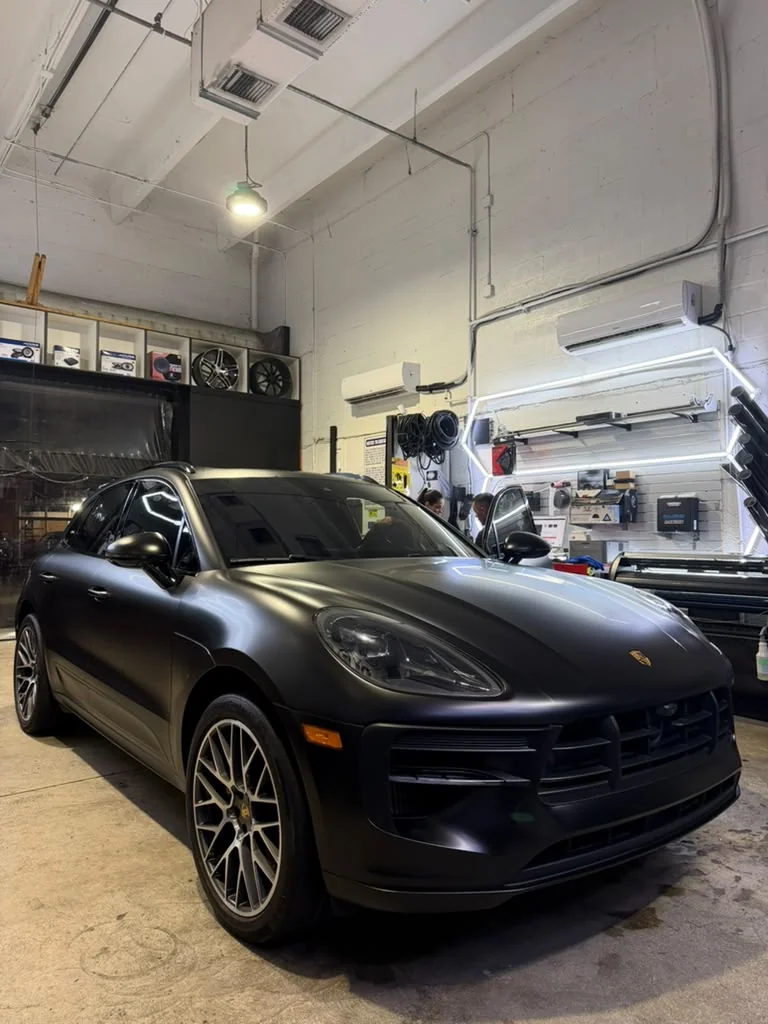

What a wrap can change
A full color change covers every visible painted panel, usually including door jambs only on request because that adds significant time and disassembly. Partial wraps target specific areas: roofs, hoods, mirrors, pillars or racing stripes. Chrome delete replaces bright window trim, grille surrounds and badges with black or another color for a more aggressive look.
Wrap film comes in a wide range of finishes: gloss, satin, matte, metallic flake, color-shift, brushed and textured surfaces. Satin and matte finishes are especially popular because they create a look that is difficult and expensive to achieve or maintain with paint.
Wrap versus paint
Paint is permanent and, when done well, can last the life of the vehicle, but a quality color change in paint involves extensive disassembly, preparation and time. A wrap is applied over the factory paint and can be removed later, returning the car to its original color, which can matter for resale or leased vehicles.
Wraps are not a fix for damaged paint. Peeling clear coat, rust or deep chips will show through vinyl or cause it to fail, and removal can lift paint that is already weak. A paint inspection before wrapping should identify whether repairs are needed first.
How a wrap is installed
Preparation decides how well a wrap lasts. The vehicle is washed, decontaminated and degreased, with extra attention to panel edges, gaps and recesses where wax and dirt collect. Handles, lights, badges, mirror caps and trim are often removed so vinyl can be tucked behind them for a cleaner, longer-lasting finish.
Vinyl is laid over each panel, positioned, stretched where needed with controlled heat and pressed into curves and recesses. Seams are planned in discreet locations when a panel is larger than the roll. Edges are wrapped around panels and post-heated so the material's memory is set and it does not pull back over time. Everything is reassembled and inspected under bright light.
Comparison criteria
When comparing proposals, ask what will be disassembled versus cut in place, where seams and relief cuts will be, whether door jambs are included, and how edges are finished. Cast vinyl is generally better suited to deep curves than calendared vinyl, which is more prone to shrinking on complex panels.
Look at installed work in person if possible. Check corners, bumper recesses and mirror caps, which are the hardest parts of any wrap. Consistent color, tight edges and no visible knife marks on the paint are good signs.
Living with a wrap in Miami
Sun exposure is the main factor in how long vinyl looks fresh. Horizontal surfaces such as the hood, roof and trunk take the most UV and heat, so covered or shaded parking makes a visible difference over time. A ceramic coating formulated for vinyl can make cleaning easier and help resist staining.
Hand wash with a gentle shampoo, avoid brush-type automatic washes, keep pressure washers away from edges, and remove bird droppings, fuel spills and bug residue quickly. Matte and satin films should never be waxed or polished, since that creates shiny patches.
Frequently asked questions
Will a wrap damage my factory paint?
It can. Risk is lower on healthy factory paint with correct installation and removal, but problems can happen, especially when vinyl is applied over repainted panels, failing clear coat or existing chips, or when it is removed carelessly. Ask for a paint inspection and an explanation of the risks before starting.
Can I wash a wrapped car normally?
Hand washing is best, using a pH-neutral shampoo and soft microfiber. Avoid brush-type automatic washes, keep pressure washers at a distance and never aim them at edges or seams. Matte and satin finishes need products that do not add gloss, and they should not be waxed or polished.
What is a chrome delete?
A chrome delete covers bright trim, such as window surrounds, grille frames, badges and accent strips, with vinyl in black or another color. It is a popular way to give a vehicle a darker, more aggressive look without changing the main body color, and it is fully reversible.
Are door jambs included in a color change?
Not by default. Wrapping door jambs requires much more disassembly and time, and it is only visible when doors are open. Some owners want it for a complete color-change effect, while others prefer to leave jambs in the original color. Confirm it in writing during the consultation so the scope is clear.
Can a wrap be removed or changed later?
Yes. That is one of its main advantages. A professional can remove the vinyl with heat and the right technique, and the vehicle can return to its original color or be wrapped in a new finish. Removal is easiest when the wrap has been maintained and has not been left baking in the sun far beyond its useful life.